|
|
|
Salyut-5: the last military lab In June 1976, the USSR launched its third and final space station focused on reconnaissance from low Earth orbit. Operating largely in obscurity from the general public, the Salyut-5 project produced a scandal inside the Soviet industry and military circles, which along with strained industry resources and political infighting, led to the premature termination of the top-secret Almaz project and to the consolidation of all future space station work in the hands of a single prime developer.
Almaz OPS-3 (Salyut-5) space station at a glance:
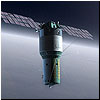
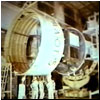
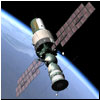
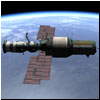
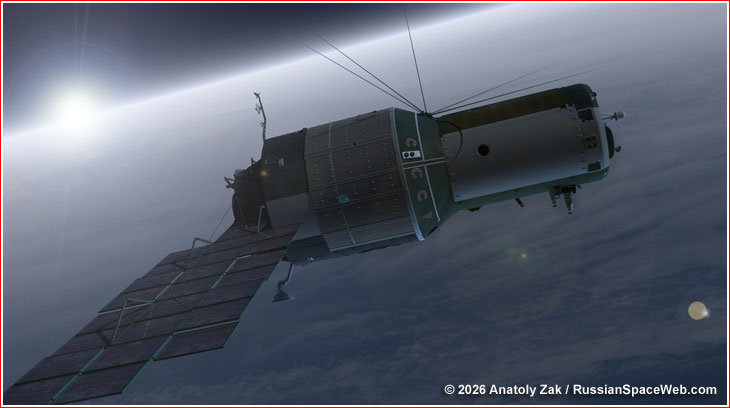
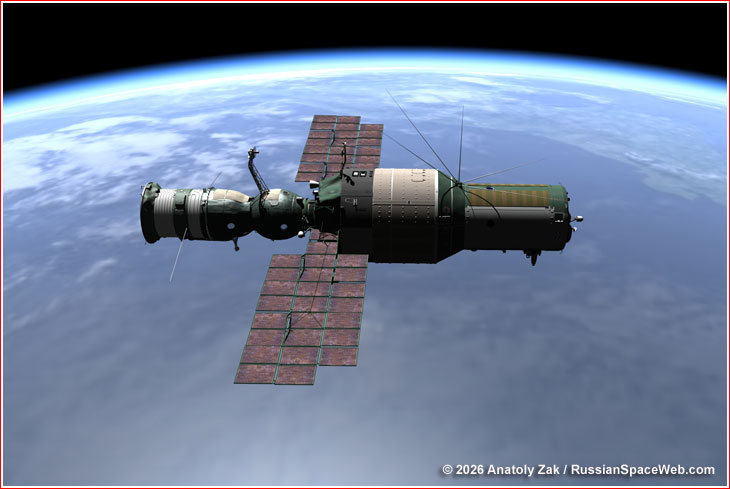
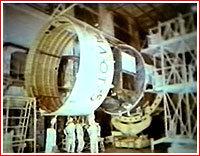
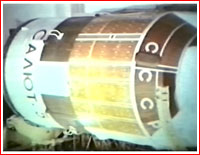
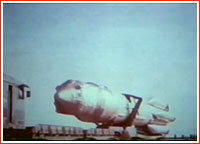
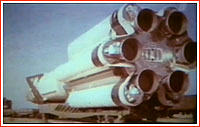
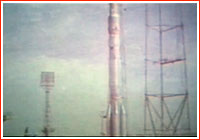
OPS-3 design (INSIDER CONTENT) Like both its predecessors, the third Almaz space station was never described in detail and no in-flight images of the vehicle has ever surfaced as of half a century after the fact. However, some grainy footage of the pre-launch processing of the OPS-3 variant and its comparison with previous and subsequent vehicles made possible a somewhat reliable reconstruction, complete with unique external features which differentiated OPS-3 from its sister stations. Also, a few upgrades and removals aboard the third Almaz, relative to the baseline outfitting of this type of spacecraft, became known in the late 2010s. OPS-3 development (INSIDER CONTENT) The construction of the third Almaz space station faced the same challenges as those experienced by its predecessors, namely the bottleneck at the main integration site and the work overload at key sub-contractors. The tense atmosphere of rivalry between the two camps operating the civilian and military parts of the Soviet space station program came to its culmination around the time OPS-3 was nearing the launch pad, and set course toward a resolution in favor of one or the other due to limited resources. How Salyut-5 was launched (INSIDER CONTENT) A Proton-K rocket with the third Almaz station lifted off on June 22, 1976, at 21:04 Moscow Time from Pad 23 at Site 81 in Tyuratam. For decades, the exact scenario for the Almaz orbital insertion, involving the separation of multiple custom-designed elements, remained almost completely obscured. Only in the late 2010s, did the newly published historical documents shed some light on the timeline of the Salyut-5 launch, its ground track and the exact architecture of the Almaz' unique upper composite, which likely traced its roots to the original preliminary design of the station, designed to integrated a heavy cosmonaut return capsule. On July 6, 1976, the crew comprised of commander Boris Volynov and flight engineer Vitaly Zholobov was launched to OPS-3 onboard the Soyuz-21 spacecraft. Despite all the upgrades, once again, the rendezvous system onboard the Soyuz developed problems, however this time the cosmonauts reached the station after a skillful manual docking. The first expedition to the OPS-3 was planned for two months; however, toward the end of the flight, the crew started complaining about a bad smell onboard their orbital home and headaches. Suspecting the presence of toxic chemicals in the station's atmosphere, possibly caused by a leak of fuel into the pressurized compartments, the officials decided to cut the mission short. The crew returned home prematurely on Aug. 24, 1976, causing a major embarrassment for the already politically besieged leadership of the Almaz project. Investigating Soyuz-21 crisis (INSIDER CONTENT)
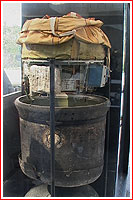
Behind the scene, the premature return of Soyuz-21 was a major embarrassment for the already politically and financially besieged leadership of the Almaz project at the TsKBM design bureau. Its rival NPO Energia, which sought to consolidate control over the Soviet space station project and its budget, seized upon the incident to argue for the cancellation of the Almaz. The next crew to visit OPS-3 was given the task of conducting a thorough analysis of the station's atmosphere due to concerns over some materials inside the pressurized compartments which might have released toxins and caused health problems during the previous expedition. Commander Vechaslav Zudov and flight engineer Valery Rozhdestvensky lifted off from Tyuratam aboard the Soyuz-23 spacecraft on Oct. 14, 1976. However, the next day, the Igla automated rendezvous and docking system aboard the ship developed problems and by the time the crew switched to manual controls, the spacecraft had spent too much propellant to make another docking attempt. During landing, the reentry capsule of the Soyuz-23 ended up in the semi-frozen Tengiz Lake, thus becoming the first Russian crew mission to land on water. The splashdown took place in the middle of the night, and in the midst of a snowstorm, with the surrounding temperature at minus 20C degrees. Upon landing, the capsule was turned upside down in the ice-cold slosh by its wet parachute. To make matters worse, the swampy shores of the lake prevented the amphibious vehicles of the rescue team from reaching the capsule stranded two kilometers offshore. Ultimately, a rescue diver, wearing only a light diving suit, jumped into the lake from a helicopter hovering over the spacecraft and after several attempts attached a line to the capsule. The chopper, unable to lift the spacecraft out of the water, then dragged the capsule toward the shore, thus saving the lives of the two cosmonauts. Soyuz-24 mission (full section under development) The next expedition, Viktor Gorbatko and Yuri Glazkov, lifted off toward OPS-3 onboard the Soyuz-24 spacecraft on Feb. 7, 1977. The crew found a normal atmosphere onboard the station, but the cosmonauts conducted an experiment aimed at demonstrating the possibility of "replacing" the air aboard the habitable orbiting vehicle. After largely completing its mission, the crew successfully landed on February 25, and a day later, a special capsule with film produced during the expedition separated from the station and landed on Earth. Another crew preparing to visit the OPS-3 included Anatoly Berezovoi and Mikhail Lisun, however the three Soyuz spacecraft, assigned to the OPS-3 program had been used up for the two successful and the one failed flights. According to the production schedule provided by Valentin Glushko, the head of NPO Energia, which manufactured the crew vehicle, an extra ship would not be ready before propellant aboard the OPS-3 station would be exhausted. Some veterans of the program speculated that Glushko, who was also in charge of the Salyut "civilian" space stations, simply "dragged his feet" to sabotage his rivals. Whatever the case, the Almaz program managers had to kill their plans to put another crew aboard OPS-3. The station was deorbited on Aug. 8, 1977. Summary of Salyut-5 missions:
|
|
 |