|
|
    
|
Lunar acrobatics: L3 cosmonaut transfer Perhaps the riskiest and most controversial aspect of the Soviet lunar expeditionary complex design, besides the lunar landing itself, was the method used to get a single crew member from the "mother ship" to the lander. The ingenious rotating boom for transporting cosmonauts was never tried during the Moon Race, but its likely derivative found its way into the Soviet space station program and aboard the International Space Station.
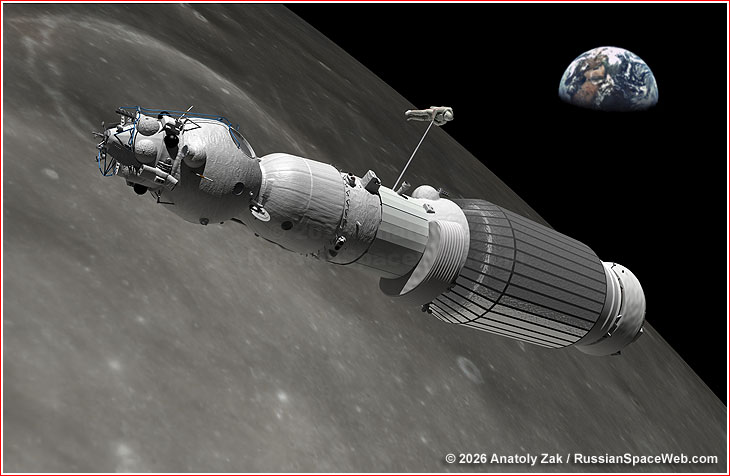
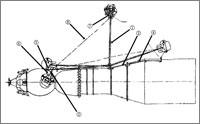
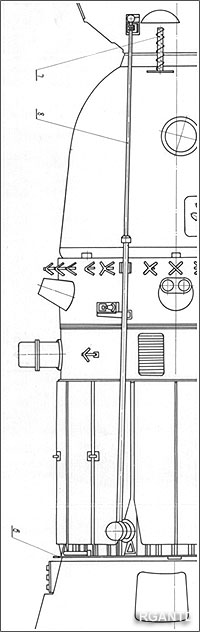
Severe mass limitations imposed on the Soviet designers of the L3 lunar expeditionary complex prompted the use of the light-weight Kontakt docking mechanism between the LOK transport vehicle and the LK lunar lander. Its main drawback was the absence of the internal transfer hatch, requiring the spacesuited cosmonaut to literally crawl from the LOK to the LK in the course of a spacewalk in lunar orbit. To facilitate the potentially perilous 10-meter trip between the two vehicles and save the precious resources of the expedition, the developers decided to install a specially designed telescopic boom on the exterior of the LOK spacecraft, which the LK pilot would ride "from hatch to hatch" during the spacewalk. (1163) At launch, the nearly three-meter device would be stored in folded position along the body of the Instrument and Aggregate Module, PAO, (to enable clean separation of the crew capsule and the Habitation Module (INSIDER CONTENT) from the PAO by the Emergency Escape System, SAS, in case of an accident on the pad or during the ascent to orbit. Once the L3 c0mplex was safely in space, following the ride on the N1 rocket, the telescopic boom could be extended by more than two meters toward the Habitation Module and anchor itself near the egress hatch and providing a mechanical bridge along the body of the LOK vehicle, providing some clearance from antennas, radiators, sensors and other elements of the spacecraft. If everything went as planned, the LK pilot would exit the Habitation Module and attach himself to the end effector of the boom. 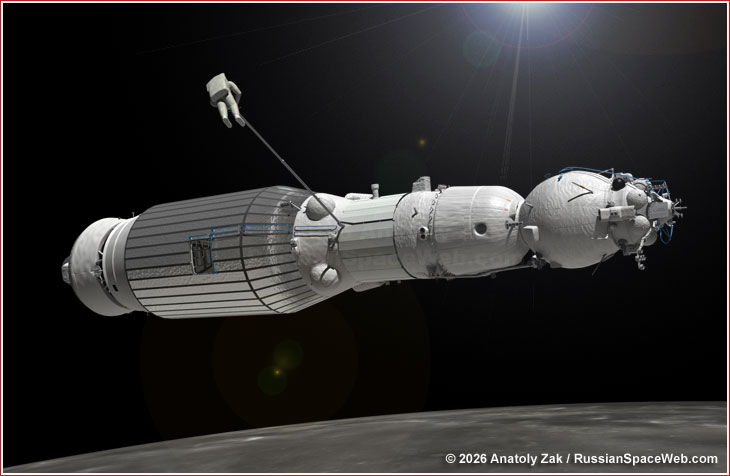
The extended arm would then swing nearly 180 degrees along the vertical plane and deliver the cosmonaut to the hatch in the payload adapter containing the LK lander. The cosmonaut would then maneuver himself toward the LK hatch and ingress the lander. A series of tethers and other safety mechanisms would be used to ensure a backed-up secure connection of the cosmonaut to the spacecraft during all phases of the transfer and to support a return scenario for the pilot in case of all potential contingencies. Despite the perceived acrobatics feel of this method, it was probably the most efficient and the safest way to perform the transfer operation, while avoiding various obstacles along the route. In case of any problems with the rotation of the boom ahead of the transfer, the LK pilot could still use it in the extended stowed position as a handrail to the back of the LOK vehicle, where another set of pre-installed handrails would lead him across the Power Module and the connecting adapter to the LK, even though such a back-up method would most likely require more time. Once inside the lander one way or the other, the pilot would close its hatch and pressurize the cabin in preparation for undocking the LK lander from the LOK mother ship. 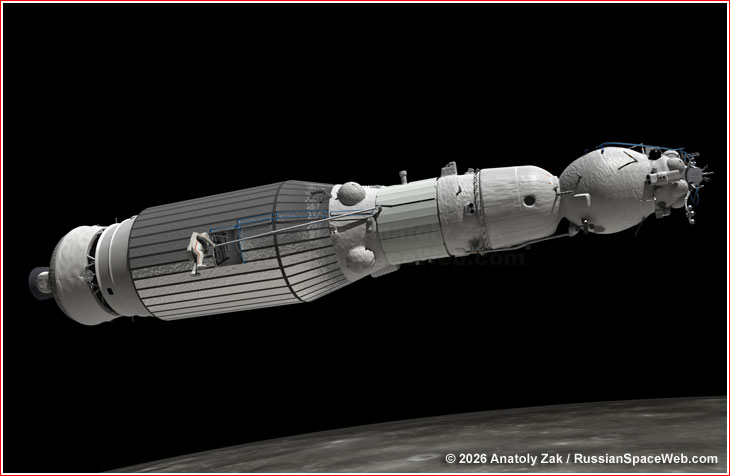
Making it back It is less clear what would happen during the pilot transfer back from the LK to the LOK spacecraft after the docking of the lunar ascent stage with the LOK vehicle in lunar orbit. Available sources indicate that another (probably much smaller and manually installed) boom would be used to bridge the gap between the LK and LOK hatches in the post-docking configuration, because the primary telescopic pole on the LOK spacecraft would not reach the lander. (1162) Possibly, depending on the actual position of the roll axis of the lander after docking with LOK, which could not be ascertained beforehand, the boom would latch to the nearest point on one of the special semi-circular railings pre-positioned on the front edge of the LOK spacecraft. After the transfer of the lander pilot back into LOK, that boom could be left in its latched position, if the final L3 expedition scenario called for the separation of the Habitation Module of the LOK spacecraft along with the lunar ascent stage in the lunar orbit ahead of the LOK's departure back to Earth. Otherwise, the boom would have to be removed after the cosmonaut transfer, to enable clean separation of the ascent stage from LOK later. Development of the telescopic boom
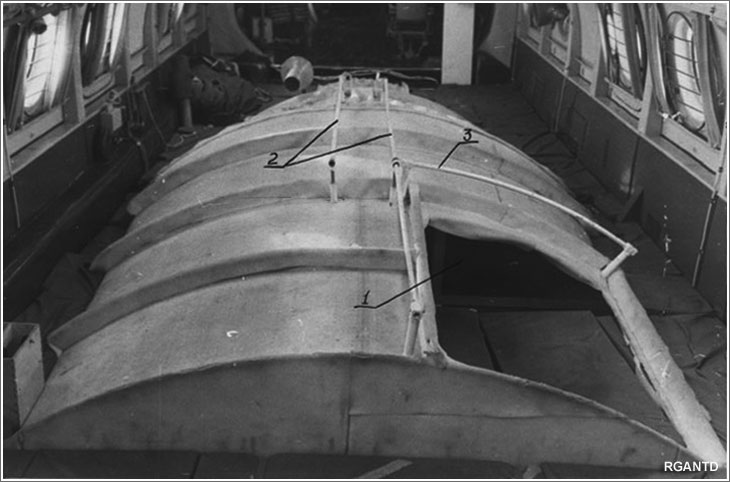
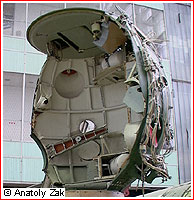
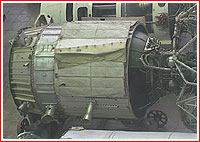
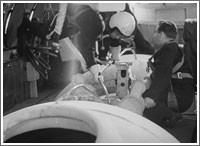
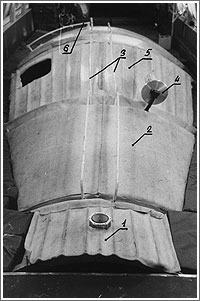
A training mockup of the LK entrance hatch in the upper fairing of the L3 expeditionary complex aboard a modified LLTu-104 flying lab used to simulate weightless conditions druing spacewalk practice. The contemporary documents released as of 2025 provided only a fragmentary information on the design of the LOK boom system. The close examination of the LOK hardware confirmed one available historical drawing placing the root and the rotation mechanism of the device at the aft end of the Aggregate Compartment of the LOK spacecraft, which was roughly half way between the hatches of the LK and LOK vehicles. On one surviving PAO module and on some historic drawings, the root point was around 68 degrees away from the zenith-pointing axis of the spacecraft, though at least one surviving copy of the PAO had it much closer to its vertical axis. A series of historical photos also showed full-scale mockups of the LOK and LK structures intended for practicing traditional transfer operations between LOK and LK aboard an aircraft designed for parabolic flights to simulate weightless conditions. (1159) Available sources also confirmed that the development of the telescopic boom started as early as 1966 and it reached final tests around 1970. There was also an apparent early proposal for a truss-like transfer arm, possibly as an alternative to a telescopic boom which ended up to be the winning design. The development time frame indicates that it was taking place roughly in parallel with the work on the rest of the LOK vehicle, which was severely behind schedule, so it is not surprising that the device never had a chance to have its debut in the Soviet lunar program due to its premature cancellation in 1974. However, a very similar system, clearly with its engineering roots in the L3 project, made it to orbit with the Mir space station in the 1980s under name a Strela (arrow) boom. After many successful operations on Mir carrying cargo and cosmonauts around the exterior of the station, it became a tool of choice for supporting spacewalkers on the Russian Segment of the International Space Station, ISS.
|
|
 |