Site map

Site update log

About this site

About the author

Mailbox


SUPPORT THIS SITE!


Searching for details:

The author of this page will appreciate comments, corrections and imagery related to the subject. Please contact Anatoly Zak.

Rollout

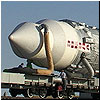
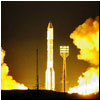
Above: A three-stage Proton rocket moves to its launch pad in Baikonur in July 2000. This version of the vehicle launched Soviet Salyut space stations, the core module of the Mir space station and the Zvezda service module for the International Space Station.


Bookmark and Share

No other launcher has played as many roles in the Russian space program as has the UR-500 rocket, known today as Proton. Conceived at the dawn of the space race as a "super-size" ICBM, the UR-500 became a major player in the race to the Moon in the mid-1960s. In the 1970s and 1980s, the four-stage version of the launch vehicle launched Soviet planetary probes toward the Moon, Mars and Venus and allowed the Soviet Union to place satellites into geostationary orbit. At the same time, three-stage Protons launched all Soviet space stations, as well as heavy transport ships and modules to expand and resupply them in space. In the 1990s, the Proton became the workhorse of Russia's commercial launch business.


Different versions of UR-500 (Proton) rocket:

Type
Manufacturer index
US designation
Sheldon designation
Developer
Payloads
UR-500
8K82
SL-9
-
OKB-52
Proton 1-4, LK-1
UR-500K (Proton-K)
8K82K
SL-12/13
-
TsKBM
Salyut
UR-500K-L1 (UR-500K-L1P)
8K82K
SL-12
-
TsKBM
L1
UR-500KM (Proton-M)
8K82KM
-
-
KB Salyut
-


The original UR-500 rocket (two booster stages):

Number of stages
2
Length of the vehicle
  • 44.3 meters (without warhead or upper stages)
  • 46.28 meters (original UR-500 ICBM with a warhead)
Diameter
7.4 meters
Weight (fueled)
620 tons (empty weight: 27 tons)
Fuel
Oxidizer Nitrogen tetroxide
Weight of propellant -
First launch 1965
Launch sites Tyuratam (four pads: Site 81 and 200 with two pads each)

Flight range:

12.000 km (for ICBM version)
Warhead type (single):
more than 10 megatons
Stage I --
Stage I weight

449.8 tons

Stage I dry weight

32.5-34.5 tons

Stage I length

21.07-21.18 meters

Stage I diameter 7.4 meters
Stage I fuel tank length

19.9 meters

Stage I fuel tank diameter 1.6 meters
Stage I burn time 127-130 seconds from launch
Stage I propulsion

6 one-chamber RD-253 engines

Stage II -
Stage II weight (fueled)

172.1 tons

Stage II dry weight

12.1 tons

Stage II length

14.56 meters

Stage II diameter 4.1 meters
Stage II burn time 210-230 seconds
Stage II propulsion
  • 3 one-chamber RD-0208 engine
  • 1 one-chamber RD-0209 engine
Launch system

ground-based: (8U259)


The third stage

After initial three test launches, Proton was upgraded with a third stage in 1966, which became a standard part of the vehicle. It is currently powered by a single main engine -- RD-0213 -- and a RD-0124 steering engine. Both propulsion units were developed at KB Khimmash (KBKhA) design bureau in the city of Voronezh and mass produced by an adjacent mechanical plant.


The UR-500 (Proton) development cooperation:

Element Developer Chief-designer Location
Overall design
OKB-52 (Branch 1)
V. Chelomei
Reutov
Production
Zavod Khrunicheva
-
Moscow (Fili)
Propulsion units (1st stage)
OKB-456
V. Glushko
Moscow
Propulsion units (2nd and 3 stage)
KBKhA
Kosberg
Voronezh
Control system
NII-885
N.A. Pilugin
Moscow
Launch complex (surface)
Spetsmash
V.P.Barmin
Moscow

Proton-M (Proton-KM)

The Proton-M, sometimes identified Proton-KM, featured several modifications, which were designed to increase the payload and reliability of the vehicle, compared to the previous version of the rocket, known as Proton-K. For the first time, a digital flight control system replaced traditional analog hardware onboard Proton. It allowed more efficient propellant consumption during the flight and, as a result, the delivery of bigger payloads into orbit. The rocket became even more powerful thanks to a new version of the RD-253 engines on its first stage. Moscow's Energomash development center increased the thrust of the engine from 151 to 160 tons. With these two improvements the Proton-M was able to deliver 22 tons of cargo into low Earth orbit compared to 20.7 tons for the standard Proton-K booster.

Briz-M

For missions beyond initial low orbits, the new Proton was equipped with a more advanced fourth stage called Briz-M. The new stage completed its inaugural flight onboard a regular Proton-K booster in May 2000, when it is delivered the Gorizont communications satellite. Briz-M takes much less space onboard the launch vehicle compared to its predecessor, the Block D upper stage, leaving the freed volume for cargo. As a result, the new payload shroud topping the rocket could offer 2.5 times more room for the satellites onboard Proton-M.

Further modifications

For a number of years, Khrunichev enterprise in Moscow, which builds the Proton rocket, hoped to introduce even more drastic changes in the Proton's design. KB Salyut, Khrunichev's development arm, planned a much more powerful upper stage than the Briz-M. Designated KVRB, it was to employ super-cold liquid hydrogen and liquid oxygen -- the same propellant used in the US Space Shuttle's main engines and in the Energia rocket. The development of a cryogenic stage initiated by Khrunichev in 1980s was stalled for years by Russia's financial problems. Work, however, has progressed somewhat during the first decade of the 21st century, thanks to commercial deals with India, which eyed similar technology for its own space launcher. KB Salyut has developed the cryogenic upper stage for the Indian government and hopes to use its off-the-shelf technology for the even bigger stage for Proton. KB Salyut representatives said that the Proton's cryogenic stage would house 18 tons of propellants compared to the 12 tons carried by the stage developed for the Indian rocket. With the new cryogenic stage, Proton would be able to compete with the Ariane-5 rocket, the most advanced European launcher, despite the geographical disadvantage of flying from Kazakhstan compared to Ariane's launch pad in equatorial region of French Guiana.


Lockheed Martin ends its partnership with Khrunichev

Published: 2006 Sept. 7

The American aerospace giant Lockheed Martin announced Thursday the sale of its stake in the International Launch Services, ILS, which has been marketing the Russian Proton rocket to commercial clients around the world. The move ended a more than decade-long partnership between Lockheed Martin and the Moscow-based Khrunichev enterprise, the Proton manufacturer. Despite this obvious setback to the commercial standing of Russia's workhorse launcher, the nation's Federal Space Agency, Roskosmos, attempted to put a positive spin on the event. The agency's press-release on the matter was entitled "Strengthening of International Positions of Khrunichev Enterprise." However many observers of the Russian space program saw Lockheed's decision as potentially damaging to the future projects at Khrunichev, including the development of the next-generation Angara rocket and the construction of its launch complex in Baikonur. In the past, Lockheed had promised to invest in the Angara project, which stalled for years due to the failure of the Russian government to fund it. Recently, Khrunichev's Proton and Rockot launchers each suffered a high-profile failure with a foreign payload, followed by a management shakeup at the company. Both vehicles successfully returned to flight during 2006.


Proton modifications for 2011

In the first decade of the 21st century, developers planned a new series of upgrades to the Proton M rocket and its Briz-M upper stage to increase its payload to geostationary transfer orbits from 6,150 kilograms to 6,300 kilograms. Modifications to the Briz-M would enable it to fly so-called supersync missions, in which payloads are inserted into a supersynchronous orbit with an apogee of 65,000 kilometers or almost twice higher than the final altitude for a typical communications satellite. Such a trajectory on the way to a regular geostationary orbit would yield around 150-200 kilograms in extra payload mass. This is close to the payload capacity which was lost after Kazakhstan banned the launch path to the 48-degree parking orbit. The Kazakh government's decision to prohibit launches below the standard 51-degree parking orbit after 2009 was at least partially prompted by a JCSAT-11 launch failure, which resulted in debris crashing within 40-50 miles of the town of Dzhezkazgan. The first missions using supersync launch profile were scheduled for 2011, however not all satellites would be capable of supporting such flight sequences. As a result, Proton was expected to fly both types of missions.

In the meantime, the last Proton-K rocket launched on March 30, 2012, with the last Oko early warning satellite.


Proton flight history


Early milestones in the Proton program:

1964 July 24: The first mockup of the UR-500 rocket arrived in Tyuratam for testing of the launch complex. The construction of the first launch pad (known today as "left" or Pad 23) for the UR-500 rocket in Area 81 was completed around this time.

1965 July 16: The first Proton rocket blasted off from Site 81 in Tyuratam carrying the Proton-1 spacecraft.

1965 Nov. 2: A Proton rocket blasted off from Site 81 in Tyuratam carrying the Proton-2 spacecraft.

1966 March 24: A Proton failed to deliver a spacecraft after launch from Site 81 in Tyuratam.

1966 July 6: A Proton rocket blasted off from Site 81 in Tyuratam successfully delivering the Proton-3 spacecraft.

1967 March 10: A Proton rocket equippped with a Block D upper stage blasted off from Site 81 in Tyuratam carrying the first prototype of the L1 circumlunar spacecraft. It was announced as Cosmos-146.

1967 April 8: A Proton rocket with a Block D upper stage blasted off from Site 81 in Tyuratam carrying a prototype of the L1 circumlunar spacecraft. It was announced as Cosmos-154.

1967 Sept. 29: A Proton rocket with a Block D upper stage failed to deliver a prototype of the L1 circumlunar spacecraft. The launch was not announced.

1967 Nov. 22: A Proton rocket with a Block D upper stage failed to deliver a prototype of the L1 circumlunar spacecraft after launch from the newly completed "right" launch pad (known today as Number 24) of Site 81 in Tyuratam. The launch was not announced.

1968 March 2: A Proton rocket with a Block D upper stage blasted off from the "left" launch pad at Site 81 in Tyuratam carrying a prototype of the L1 circumlunar spacecraft. It was announced as Zond-4.

1968 April 23: A Proton rocket with a Block D upper stage failed to deliver a prototype of the L1 circumlunar spacecraft after launch from the "right" launch pad at Site 81. The launch was not announced.

1968 July 14: An explosion at the Proton launch complex with a L-1 (Zond) spacecraft in pre-launch processing killed one person.

1968 Sept. 15: A Proton rocket with a Block D upper stage blasted off from the "left" launch pad at Site 81 in Tyuratam carrying a prototype of the L1 circumlunar spacecraft. It was announced as Zond-5.

1968 Nov. 16: A Proton rocket successful launched the Proton-4 science spacecraft from the "right" launch pad of Site 81 in Tyuratam.

1969 Jan. 20: A Proton rocket failed to place an L1 spacecraft into orbit after launch from "left" launch pad of Site 81 in Tyuratam.

1969 Feb. 19: A Proton rocket failed to place a lunar probe into orbit after launch from "right" launch pad of Site 81 in Tyuratam.

1969 March 27: A Proton rocket failed to place a Mars probe in orbit after launch from "right" pad at Site 81 in Tyuratam.


Recent Proton missions in detail and their statistics:

Year
Total missions
Failed launches
Success rate*
2001
6
0
-
2002
9
1
-
2003
5
0
-
2004
8
0
-
2005
8
0
-
2006
6
1
-
2007
7
1
-
2008
10
1
-
2009
10
0
-
2010
12
1
94.0 percent
2011
9
1
93.3 percent
2012
11
2
81.8 percent
2013
3
0
-
-
101
8
92 percent

*Success rate for the reported period since 2001


In-depth overview of recent missions:

Proton missions in 2013

Bookmark and Share


Page author: Anatoly Zak; Last update: May 14, 2013

Page editor: Alain Chabot; Edit history: February 12, 2008; Feb. 6, Jan. 23, 2011

All rights reserved

PICTURE GALLERY

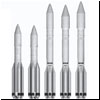
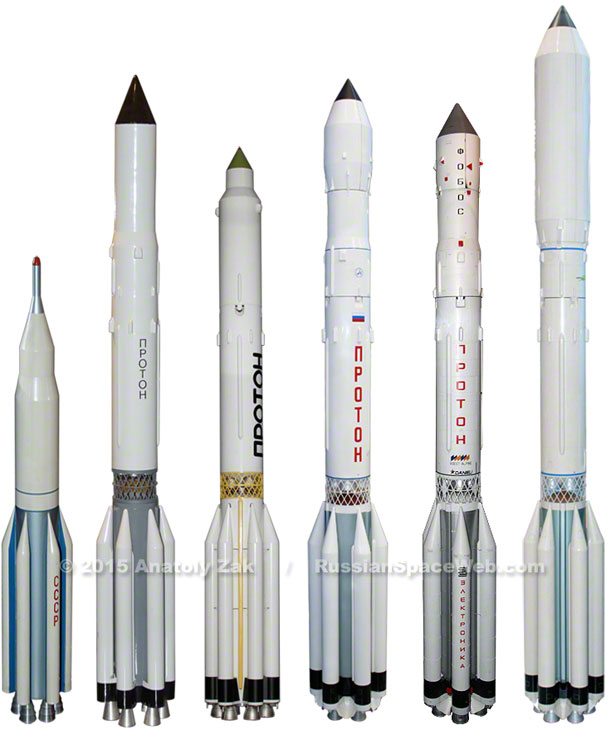
Scale models used in dynamic testing illustrate the development history of the Proton rocket. Seen on the right is the early concept of the Proton rocket which would be comprised of four UR-200 missiles. The UR-200 can be seen separately on the left. The model in the center represents the final version of the UR-500 rocket. Copyright © 2001 Anatoly Zak


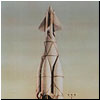
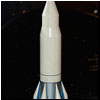
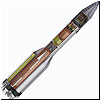
A decorative scale model of the UR-500 launcher apparently showing the early configuration of the booster designed to carry LK-1, a manned spacecraft for lunar flyby. OKB-52, the Proton developer, presented this model to its rival OKB-1, which was developing its own version of the circumlunar spacecraft. Ironically, it was OKB-1's L1 spacecraft for circumlunar mission, which ultimately rode the Proton into space, while LK-1 project was abandoned. Copyright © 2001 Anatoly Zak


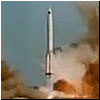
Stills from the film footage, documenting the launch of the two-stage version of the UR-500 rocket. Credit: Khrunichev


The Proton rocket with the L1 spacecraft for circumlunar missions is poised for launch in Baikonur.


The concept of the UR-500LKS complex, designed to carry the LKS "mini-shuttle" into orbit. Credit: NPO Mash


Kristall

The Proton rocket with the Kristall module of the Mir space station sits on the launch pad in Area 200 of Baikonur Cosmodrome, shortly before launch on May 31, 1990.


FGB

The Proton rocket with the Zarya FGB control module is being erected on the launch pad in November 1998. Click to enlarge.


FGB fairing

The payload fairing, which covered the FGB module during its ride to orbit onboard the Proton rocket in November 1998. Click to enlarge. Credit: Khrunichev


Yamal

A scale model of the head section of the Proton rocket with Block D upper stage and a pair of Yamal satellites. Click to enlarge. Copyright © 2009 Anatoly Zak


The scale model of the Proton-M rocket with the KVRB hydrogen-powered upper stage. Copyright © 2001 Anatoly Zak


Comparison of Proton-K and Proton-M launch vehicles. Credit: ILS


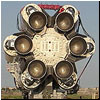
Tail view of the Proton rocket shows its first stage with six external tanks and six main RD-253 engines. Copyright © 2000 Anatoly Zak


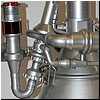
The 11D43 engine proposed by Valentin Glushko around 1960 for the first stage of the Proton rocket. It had low-expansion ratio and could be gimbaled to control the rocket in flight. Four such engines along with four 8D43 engines would be used on the first stage, if this configuration was ever approved. Copyright © 2000 Anatoly Zak


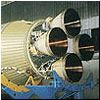
A full scale mockup of the RD-253 engine for the Proton's first stage. Copyright © 2002 Anatoly Zak


The RD-301 engine intended for the Proton's 11S813 fourth stage, which would burn a mix of liquid fluorine and ammiak! The combination, which has been under development since July 1969, was designed for the delivery of SNTV telecommunications satellite. The program of both the satellite and its upper stage was canceled in 1977. Copyright © 2002 Anatoly Zak