|
|
|
    
|
||||||||||||||||||||||||||||||||
|
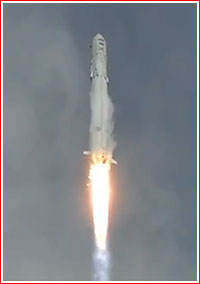
Angara-1.2 flies its seventh mission The light version of the Angara rocket carrying classified payloads lifted off from Plesetsk on April 23, 2026, on its seventh mission. 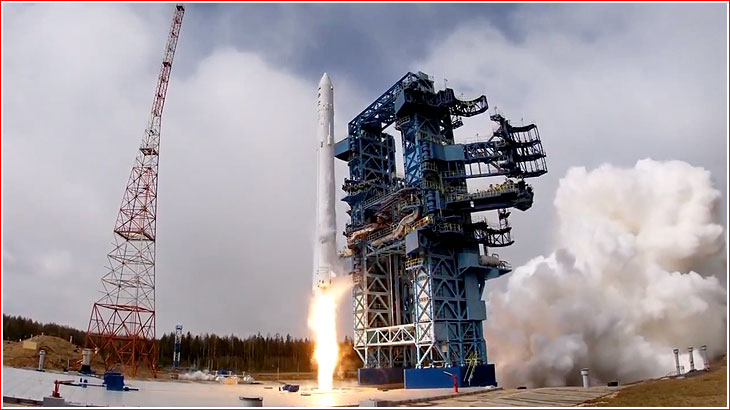 The sixth Angara-1.2 mission at a glance:
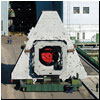
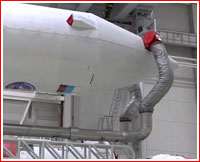
Around April 10, 2026, Russian authorities issued multiple warnings to air and sea traffic about upcoming rocket launches: one on April 13 and April 29, 2026, with launch windows between 21:00 and 23:59 UTC, and another between April 14 and April 30, with an unusually long window between 00:00 and 16:00. As noted by a space historian Bart Hendrickx, the announced danger zones matched known impact sites for the payload fairing of the Angara-1.2 rocket and for the second stage of the Soyuz-2 rocket, indicating parallel launch campaigns for two vehicles based in Plesetsk. The Soyuz-2-1b launch did take place on April 17, 2026, after which additional warnings remained in place until April 30 and matched the ascent trajectory of the Angara-1.2 flown during its fifth launch. (That mission delivered a quartet of military satellites to an orbit with an inclination 96.7 degrees). 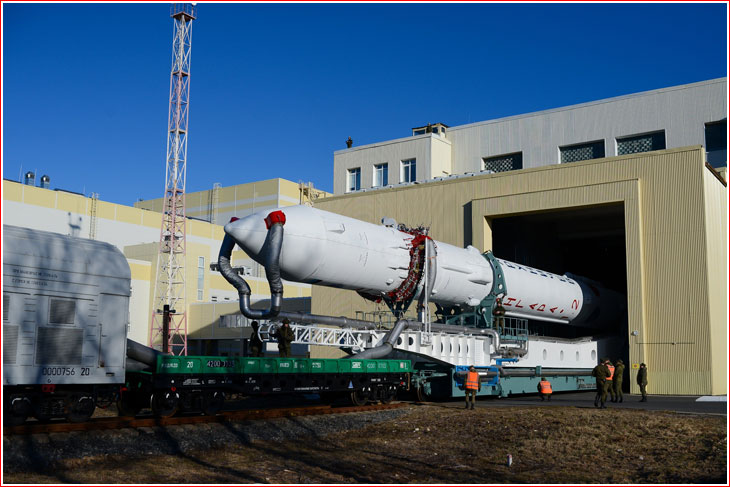 The seventh Angara-1.2 rocket emerges from the vehicle assembly building in Plesetsk for a trip to the launch pad. Moreover, the official TV report about a visit of military cadets to Plesetsk for the April 17 Soyuz launch mentioned the students witnessing the ongoing assembly of the Angara rocket at the center. At the same time, some coordinates for danger zones covering a period from April 17 to April 19, 2026, matched the areas previously used to drop components of Soyuz rockets. On April 23, 2026, official statement from the Russian military said that the Angara-1.2 rocket had successfully delivered multiple payloads for the Ministry of Defense, following the launch at 11:29 Moscow Time. As expected, the US Space Force catalogued fourt objects in orbits typical for previous OO MKA satellites:
By May 2026, the US Space Force started identifying the quartet of satellite launched on the 7th Angara-1.2 rocket as Kosmos-2615, -2616, -2617 and -2618. By the middle of the same month, at least two satellites in the quartet appear to make orbit-raising maneuvers, which only partly compensated for the loss of altitude caused by the natural orbit decay.
|
|

|