|
|
    
|
|||||||||||||||||||||
|
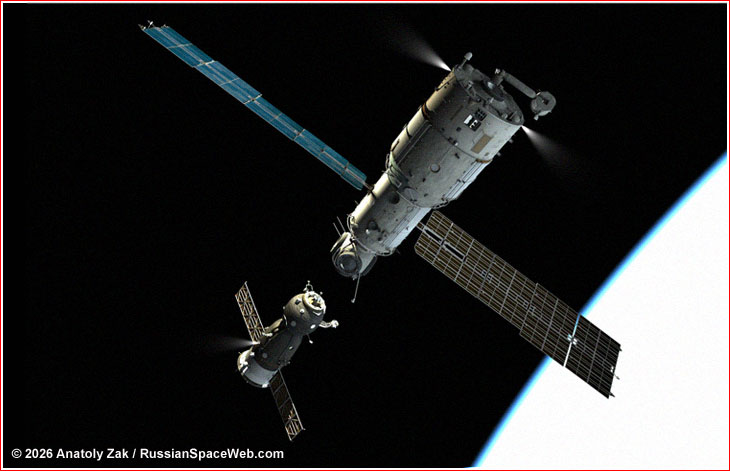
First Mir crew launches On March 13, 1986, the USSR sent the first expedition to the nascent Mir space station launched just three weeks earlier. Soyuz T-15 with Leonid Kizim and Vladimir Soloviev reached the Core Module on March 15.
 Soyuz T-15 mission at a glance:
Origin of the Soyuz T-15 mission As the development of the Core Module for the Mir Space Station was progressing at NPO Energia in Podlipki, the preparations for the first expedition to the future orbital base were initiated at the nearby Star City. In September 1984, a group of three cosmonauts, including military pilots Yuri Romanenko, Vladimir Titov and Yuri Malyshev, was formed. They were joined by NPO Energia engineers Musa Manarov and Aleksandr Laveikin in November of the same year. The Mir cosmonaut group was expected to form the first primary and back-up crews for the first expedition, but these plans were thrown in disarray in November 1985, when an ongoing expedition on the Salyut-7 station had to be cut short by an illness of Vladimir Vasyutin. The situation was further complicated by delays with the introduction of the Soyuz-TM crew vehicle upgrade until as late as the end of 1986. Equipped with the new-generation Kurs rendezvous system, the TM variant was designed to be used specifically on Mir, because it would not require re-orientation of a large modular station during the approach of visiting vehicles. With many systems for the older Soyuz-T already out of production, planners resorted to employing the Descent Module which survived a narrow escape from an on-pad rocket explosion in September 1983 for assembling the final spacecraft in the series — Soyuz T-15 (Production No. 21L). Within days after the premature return of the fourth primary expedition from Salyut-7, an entirely new plan of action had emerged aiming to complete the interrupted work on the abandoned station, while starting the construction of Mir in parallel! First of all, the departure from Salyut-7 of the TKS-M spacecraft (with the cover-up name Kosmos-1686), which was originally scheduled for Jan. 10, 1986, was cancelled, so that its valuable instruments and payloads could be used by future crews. In addition, the highly maneuverable spacecraft could provide attitude control for the joint stack during future attempts at dockings with Salyut-7. Secondly, the 21L transport ship, originally intended for launching an all-women crew to Salyut-7 in March 1986, was re-assigned to deliver a long-term expedition to both — Mir and Salyut-7. According to the newly proposed plan, the Soyuz would fly to Mir’s Core Module first, where the crew would spend 50 days, activating the fresh space base and unloading a pair of cargo ships. The cosmonauts would then board their Soyuz, undock and fly to Salyut-7 for a 50-day stint. Under this scenario, the entire expedition would conclude at the end of June 1986. To make it work, the Core Module of Mir would have to be launched into the same orbital plane as Salyut-7, which was just a matter of choosing the right time window, when Salyut’s orbital plane moved into the range of launch azimuth of Tyuratam and then performing the launch within seconds’ accuracy. Because Mir’s core was equipped with only one Igla rendezvous system on its aft port, compatible with Progress cargo ships and Soyuz-T variants, the crew ship could only use its Igla system for a long-range rendezvous, before switching to manual control and letting the pilot guiding it to the front port equipped with the new-generation Kurs system compatible exclusively with the upgraded Soyuz-TM variant. Another challenge for the new plan was posed by reoccurring problems with the Igla rendezvous system on the aft port of Salyut-7, while its front port was occupied by the TKS-M ship. Fortunately, the previous expedition to the station had already learned how to use a specially developed laser range finder during docking with the “non-cooperative” Salyut-7 in 1985. The same method was adopted for the upcoming Soyuz T-15 mission. Given the unprecedented nature of the flight, the program management decided to cut the first Mir crew from three to two people in order to free resources aboard Soyuz T-15 for a two-station expedition. (231) The already training Mir crews were grounded for the time being, likely in part due to the fact that the specialized modules they were preparing to operate within the Mir complex were not ready anyway. (50) 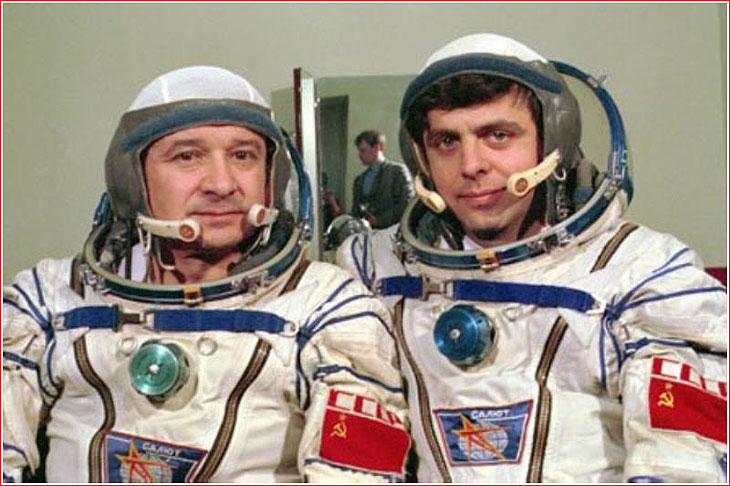
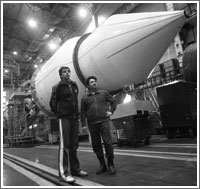
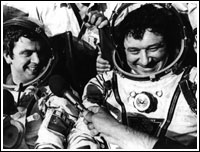
Instead, veteran cosmonauts Leonid Kizim and Vladimir Soloviev, who had completed a 237-day mission aboard Salyut-7 in 1984 and were experienced in manual docking, in-orbit repairs and long-duration missions aboard the ailing station, were chosen for the flight. According to Soloviev’s recollections, he and Kizim were summoned to their respective bosses — Soloviev to Valentin Glushko, the Head of NPO Energia, and Kizim to Vladimir Shatalov, the Head of the Cosmonaut Corps at the Star City training center. When asked to choose their potential crew mates for the mission out of three or four candidates, both named each other. By Nov. 25, 1985, a total of three crews were formed for a potential two-station expedition:
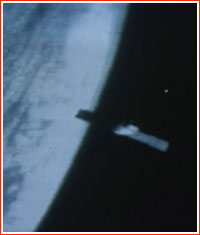
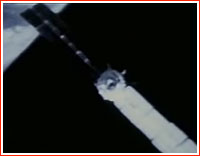
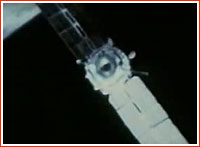
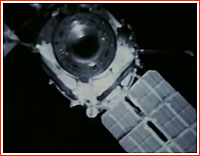
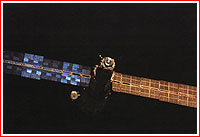
Because it would be the first expedition to Mir, it was designated EO-1 from the Russian Osnovanaya Ekspeditsiya – primary expedition. (231) Four days after the successful launch of the Mir’s Core Module on Feb. 20, 1986, the Soviet TASS news agency reported that checks of the new station in different flight modes were underway and an orbit correction had been performed “in recent days.” Following the launch, the station was in a 352 by 324-kilometer orbit, TASS said. The fact that the new station was in the same orbital plane as the veteran Salyut-7 was a clear hint to observers about a possible interaction between the two programs. Of course, a variety scenarios could be speculated, including docking between the two stations, as was depicted on some Soviet space paintings circulating at the time. Soyuz T-15 lifts off Even before its launch, the Soyuz T-15 mission marked a first in the political arena. Breaking with the decades of secrecy, interrupted only by joint missions with cosmonauts outside of the Soviet block, the USSR announced the upcoming launch around 24 hours in advance. It was another sign of the openness or "glasnost"gradually introduced by the new Soviet leader Mikhail Gorbachev, who took power in the Kremlin in 1985. On the day of the Soyuz T-15 launch, the Soviet press published a statement that the meeting of the State Commission on March 12 approved the crew of Soyuz T-15, which included Kizim and Soloviev. The report also said that the liftoff was scheduled for 15:33 Moscow Time on March 13. (1141) The Soyuz T-15 spacecraft lifted off from Site 1 in Tyuratam as planned. To the delight of space observers around the world, the launch was broadcast on live TV. Around nine minutes later, the third stage of the launch vehicle inserted the spacecraft into a 193 by 238-kilometer orbit as planned. Of course, the veil of secrecy was just barely lifted from the Soviet space program. The official reports about the launch stated only the obvious fact that the Soyuz T-15 flight program included docking with the Mir space station on March 15. There was no official word about a planned trip to Salyut-7 yet. The fact that the Soyuz T-15 was the final spacecraft in the series was also disclosed but what would come to replace it was initially anybody's guess. (50) To save propellant for its upcoming trip between Mir and Salyut-7, Soyuz T-15 flew a rendezvous profile with the Core Module lasting nearly 50 hours. After the crew vehicle completed 1.5 revolutions around the Earth, around two hours into the flight on March 13, 1986, it fired its SKD main engine over the Pacific. The maneuver mainly raised the perigee, resulting in a 238 by 290-kilometer orbit, according to Western tracking. On March 14, 1986, TASS reported that by noon, Soyuz T-15 had completed 14 orbits around the Earth, which included an orbit correction, while “another long-range rendezvous maneuver” with the station was planned for the second half of the day. According to the Soviet announcement, the spacecraft was reported to be in a 240 by 298-kilometer orbit. (1142) By March 15, 1986, the maneuvers brought Soyuz T-15 within 20 kilometers from Mir, where the rendezvous systems on the crew vehicle and the station established radio-contact with each other. The fully automated approach continued until a distance of around 200 meters. From that point on, the Igla was shut off, while Kizim switched to manual controls and carefully flew Soyuz around the Core Module to align with the forward docking port. The successful docking took place on March 15, 1986, at 16:38 Moscow Time, a bit earlier than planned thanks to Kizim's piloting skills. The official Soviet confirmation of the docking mentioned that there were now two Soviet complexes operating in space — Mir/Soyuz T-15 and Salyut-7/Kosmos-1686 — but, still, there was no word about the plans for Soyuz T-15 to make a trip to Salyut-7. (1143)
|
|
 |